












































1 min read

Deepfake Fraud Is Here: How Businesses Can Defend Against AI Scams

Deepfake Fraud Is Here: How Businesses Can Defend Against AI Scams
2:47

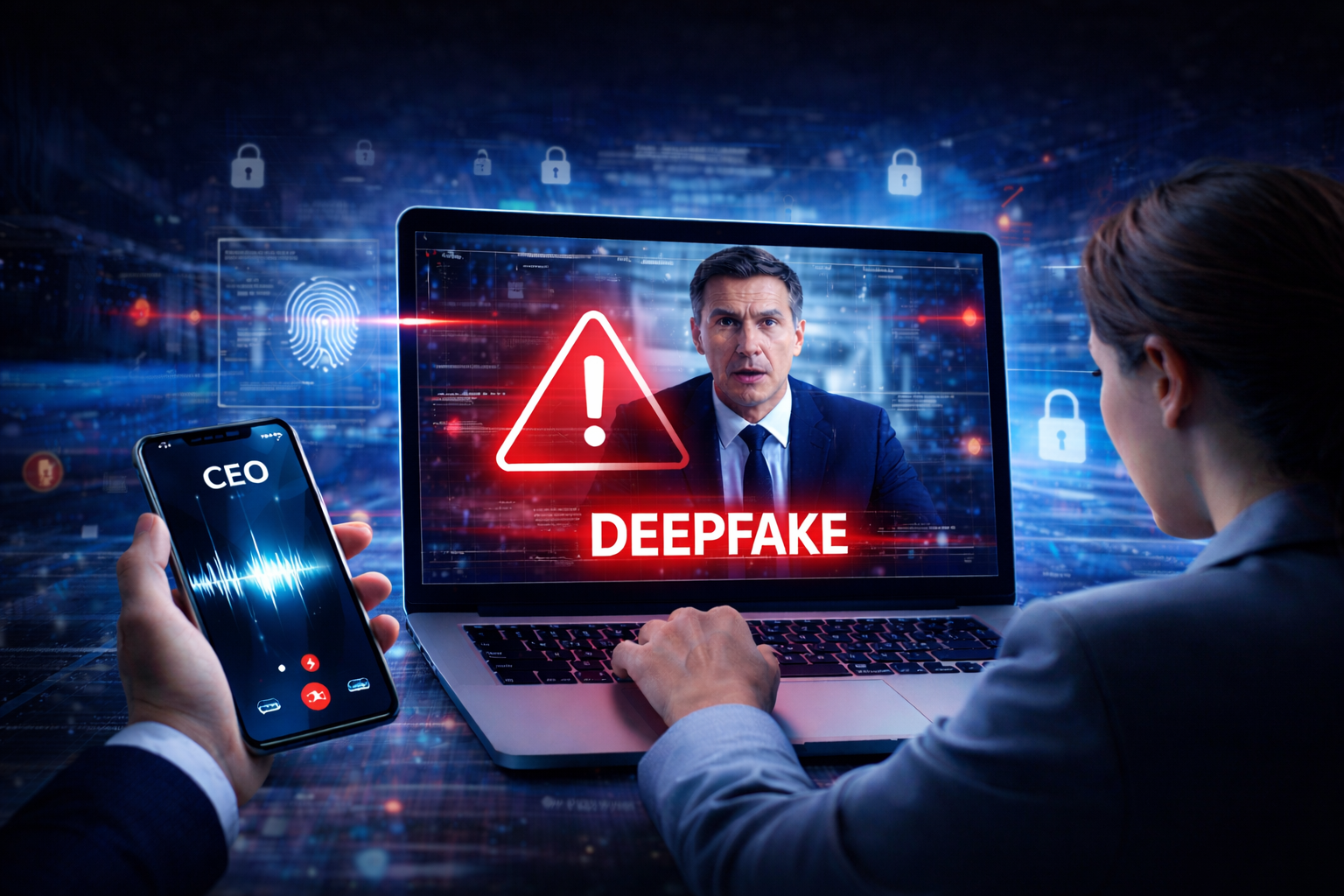
Artificial intelligence is transforming business operations but it’s also giving cybercriminals powerful new tools. One of the most urgent threats today is deepfake fraud, where AI generated audio, video, or images are used to impersonate real people and manipulate employees into making costly mistakes.

Deepfakes are no longer futuristic. They’re happening now, and businesses must be prepared.


What Is Deepfake Fraud?

Deepfake fraud uses AI to convincingly mimic trusted individuals, such as executives, vendors, or employees. Attackers can create:

  • Fake video calls
  • Voice cloned phone requests
  • Synthetic customer identities
  • Altered media used for deception

These scams are especially dangerous because they exploit something businesses rely on every day: Trust.


Why Deepfake Scams Are Increasing 

Deepfake tools are becoming cheaper and more accessible, making it easier for criminals to launch realistic impersonation attacks. Remote work, public executive content online, and fast evolving AI models have all accelerated the threat.


The Risks for Businesses 

Deepfake fraud can lead to:

  • Unauthorized wire transfers
  • Credential theft
  • Data breaches
  • Reputational damage
  • Legal and compliance issues

Even one successful impersonation can create major financial and operational disruption.


How Businesses Can Defend Against AI Scams

Here are key steps every organization should take:

1. Strengthen Verification Processes

Require secondary confirmation for financial transactions, password resets, or sensitive requests especially those marked “urgent.”

2. Train Employees

Teach teams how to recognize deepfake red flags, such as unusual urgency, secrecy, or communication that feels “off.”

3. Limit Executive Exposure

Reduce publicly available voice and video content that scammers can use to build impersonations.

4. Use Detection and Monitoring Tools

AI-based fraud detection can help identify anomalies in voice, video, and transaction behavior.

5. Enforce Multi-Factor Authentication

MFA remains one of the most effective barriers against credential based attacks.

6. Work With a Cybersecurity Partner

A cybersecurity partner can provide threat intelligence, employee training, detection tools, and response support as AI scams evolve.


The Bottom Line: Deepfake Fraud Is the Next Wave of Cybercrime

Deepfake fraud is here, and it will only become more sophisticated. Businesses that rely on trust based processes, outdated security protocols, or untrained staff are increasingly vulnerable. Defending against AI scams requires combining human awareness, technical controls, and strong verification methods. The organizations that act now will be the ones best prepared for what comes next.


Want to Strengthen Your Defense Against AI-Powered Fraud?

Deepfake scams are changing the cybersecurity landscape but you don’t have to face them alone. Cortrucent Security can help your organization build resilient defenses, detect threats early, and protect your people, finances, and reputation in the age of AI.

Cortrucent Honored as Best Managed Security Service Provider (MSSP) in 2025 Cybersecurity Excellance Awards

Cortrucent Honored as Best Managed Security Service Provider (MSSP) in 2025 Cybersecurity Excellance Awards

Princeton, NJ — End of Year Announcement – Cortrucent Security, a leading provider of managed security services, is proud to announce that it has...

Read More
The ROI of Investing in Cybersecurity

The ROI of Investing in Cybersecurity

Cybersecurity is often viewed as a cost rather than an investment. Because strong security measures don’t directly generate revenue, many businesses...

Read More
Cybersecurity for Healthcare: Biggest Risks & Best Practices

Cybersecurity for Healthcare: Biggest Risks & Best Practices

Healthcare organizations are among the most targeted industries for cyber attacks. From hospitals and clinics to private practices and healthcare...

Read More