









































Deepfake Fraud Is Here: How Businesses Can Defend Against AI Scams
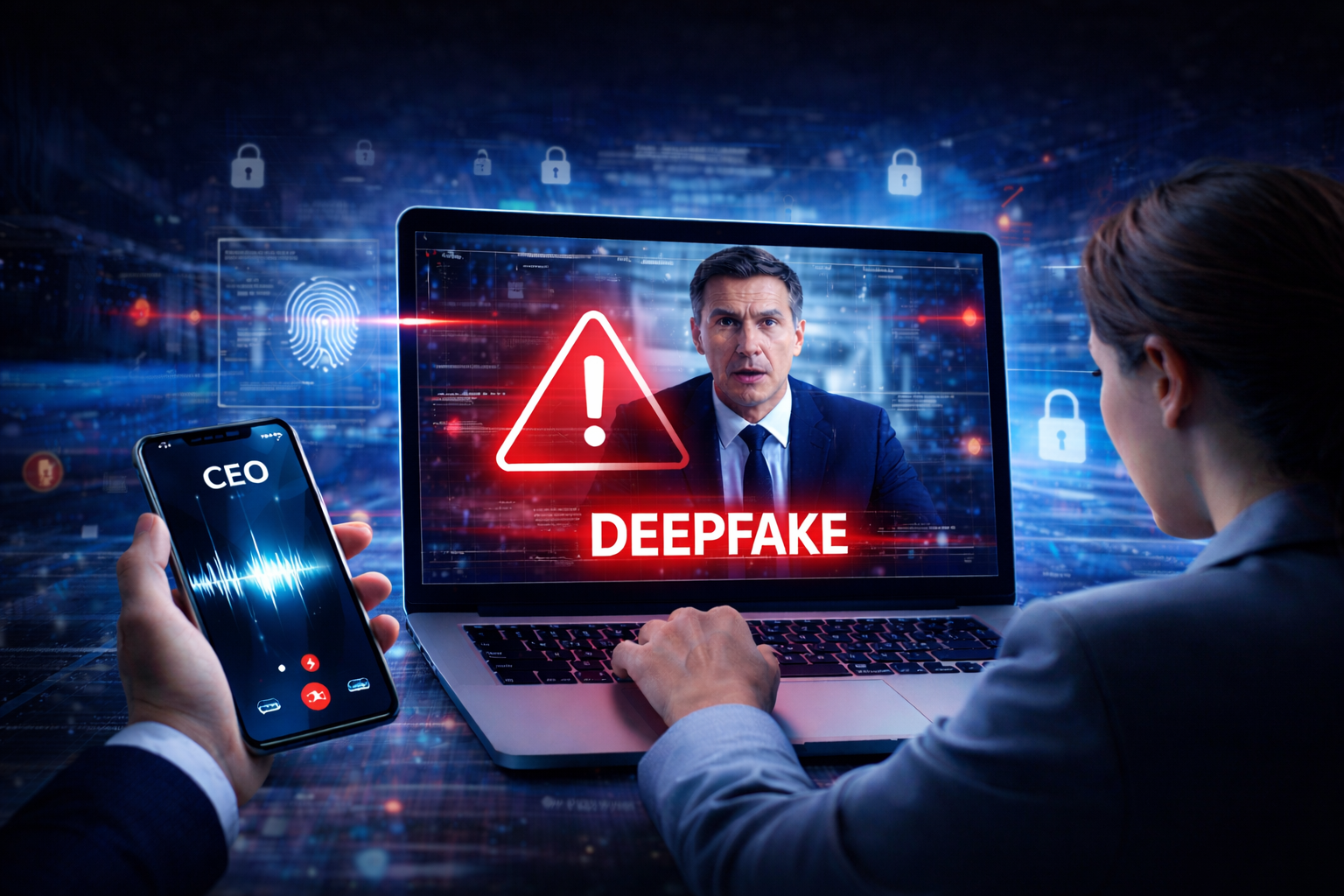
Artificial intelligence is transforming business operations but it’s also giving cybercriminals powerful new tools. One of the most urgent threats...
Tailored consulting, engineering, and managed security services to meet your needs.
Discover who we are, what drives us, and how Cortrucent partners with businesses to deliver lasting security and technology success.
Explore Cortrucent’s latest insights, industry updates, and expert resources to strengthen your cybersecurity and IT strategy.
3 min read
Madison Bocchino
:
Updated on May 1, 2026
When people think about cybersecurity, they usually picture firewalls, encryption algorithms, or maybe a dramatic "hack" unfolding in real time. The spotlight tends to stay on tools, threats, and technical breakthroughs. But behind every secure system is something far less glamorous and far more critical: operations.
The operational side of cybersecurity is where strategy meets reality. It's not about what could protect your systems; it's about what actually works, consistently, under pressure, with imperfect people and evolving constraints. It's often the difference between a resilient organization and one that collapses under a routine attack.
Organizations love buying security tools. It feels productive, measurable, and decisive. But tools alone don't create security, processes do.
For example, a company might invest in a top tier intrusion detection system. But if alerts aren't triaged quickly, or if there's no clear escalation path, the tool becomes noise. Operational maturity means having defined workflows: who responds, how quickly, and with what authority.
Without that, even the best technology becomes shelfware.
Security teams are drowning in alerts. Thousands per day isn't unusual. The operational challenge isn't detecting threats; it's deciding which ones matter.
Over time, analysts can become desensitized. This "alert fatigue" leads to slower responses or missed signals entirely. High profile breaches have occurred not because threats went undetected, but because they were ignored among the noise.
Good operations tackle this head on:
It's less about seeing everything and more about seeing the right things.
Cybersecurity conversations often frame humans as the problem: phishing victims, weak passwords, accidental leaks. But operationally, humans are also the solution.
A well trained, well supported team can detect anomalies some tools miss, adapt to new threats, and make judgment calls that no automated system can replicate.
Operational excellence includes:
Security fails when teams are underprepared or overburdened, not just when attackers are clever.
Every organization has an incident response plan. Fewer have one that works under real conditions.
Operationally, incident response is messy. Communication breaks down. Roles blur. Decisions need to be made with incomplete information.
The difference between a minor incident and a major breach often comes down to:
Tabletop exercises help, but only if they reflect real world chaos, not ideal scenarios.
Patching systems, rotating keys, reviewing access permissions, these tasks aren't exciting, but they're foundational.
Most breaches don't exploit cutting edge zero days. They take advantage of:
Operational discipline, doing the boring things consistently, is one of the most effective defenses available.
Cybersecurity metrics often look impressive but say little. Counting blocked attacks or deployed tools doesn't reflect real security posture.
Operationally useful metrics focus on:
These measure performance, not just activity.
Perhaps the most overlooked operational factor is culture.
If security is seen as a blocker, people will work around it. If reporting incidents leads to blame, issues will be hidden. If leadership doesn't prioritize security, neither will anyone else.
Strong cybersecurity operations depend on:
Cybersecurity doesn't fail because of a lack of technology. It fails because of gaps in execution.
The operational side, the workflows, the people, the habits, the culture is where security is either reinforced or quietly undermined every day. It's not flashy, and it doesn't make headlines, but it's where the real work happens.
Until more organizations treat operations as a core part of cybersecurity, not an afterthought, they'll keep learning the same lessons the hard way.
Artificial intelligence is transforming business operations but it’s also giving cybercriminals powerful new tools. One of the most urgent threats...
Most cyber attacks don’t happen in a single moment. Attackers often gain access quietly, move through systems unnoticed, and gather information...
Artificial intelligence is rapidly transforming the way businesses operate. From ChatGPT and Microsoft Copilot to AI-driven automation and analytics,...