







































Cybersecurity for Healthcare: Biggest Risks & Best Practices
Healthcare organizations are among the most targeted industries for cyber attacks. From hospitals and clinics to private practices and healthcare...

Tailored consulting, engineering, and managed security services to meet your needs.
Discover who we are, what drives us, and how Cortrucent partners with businesses to deliver lasting security and technology success.
Explore Cortrucent’s latest insights, industry updates, and expert resources to strengthen your cybersecurity and IT strategy.
4 min read
Madison Bocchino
:
Updated on March 25, 2026
When businesses think about cyber risk, the conversation often starts with stolen data.
Data exposure is serious, but it is not always the first or most immediate source of business damage. In many cases, the bigger problem is losing access to the systems that keep daily operations moving.
Email platforms, cloud environments, identity systems, collaboration tools, customer databases, ERP platforms, order processing systems, and internal portals are no longer just technical assets. They are the infrastructure behind modern business operations. When those systems become unavailable, even for a short period of time, the impact can spread quickly across the organization.
That is the real business cost many companies underestimate.
A disruption to critical systems is often viewed first as a technology problem. In reality, it becomes a business problem almost immediately.
When employees cannot access the tools they rely on, communication slows down. Approvals start to stall, orders are delayed, service teams lose visibility, customers wait longer, and leadership has less clarity. Operations begin shifting into manual workarounds, which are often slower, less reliable, and harder to scale.
What starts as a system outage quickly turns into lost momentum across the business. This is why access matters so much. In today's environment, access to systems is often access to productivity, revenue, customer service, and continuity.
The business cost of losing access to critical systems is rarely isolated to one team or one moment in time.
The first impact is usually productivity. Employees cannot complete routine tasks if they are locked out of the systems that support communication, documentation, reporting, or decision making. Even a temporary disruption can throw off schedules and create downstream delays that continue after systems are restored.
The second impact is operational. Core workflows often depend on connected tools and centralized platforms. If one key system becomes unavailable, related processes may also slow down or stop. Customer requests may go unanswered. Internal coordination may weaken. Deadlines may slip. In industries with physical operations, the disruption can extend into logistics, fulfillment or production.
The third impact is financial. Revenue can be affected directly when businesses cannot process transactions, access customer records, manage orders, or maintain normal service levels. Even when the immediate loss is not obvious, the financial consequences often show up later through delayed work, recovery costs, missed opportunities, or weakened customer trust.
Customers may never know the technical details of an internal disruption, but they will notice the outcome.
They notice delayed responses, interrupted service, inconsistent communication, and missed expectations. If client facing teams are operating without reliable access to the tools they need, the customer experience suffers. Over time, repeated disruption or poor communication can damage trust in ways that are more difficult to repair than a technical outage itself.
That is why the true cost of losing access to critical systems is not measured only in downtime. It is also measured in reputation, reliability, and confidence.
Many organizations think about outages in terms of one question: how fast can systems come back online?
That matters, but restoration is only one part of recovery.
Once access is restored, teams are often left managing a backlog of delayed work, reconciling manual processes, responding to customer concerns, reviewing what was missed, and trying to return to normal operations under pressure. Technical recovery may happen in phases, but operational recovery often takes longer.
In other words, the business cost does not end when the systems come back. In many cases, that is when the second phase begins.
Most businesses are more digitally dependent than ever. Organizations have built efficiency around cloud platforms, remote collaboration tools, centralized identity systems, shared file environments, and integrated business applications. These systems make work faster and more connected, but they also create concentration risk.
When a small number of platforms support a large percentage of business activity, losing access to one of them can create widespread disruption.
This is one of the defining realities of modern cyber risk.
The question is no longer only whether a business can prevent every incident. It is whether the business can continue operating when a critical system becomes unavailable.
The organizations that handle disruption best are not always the ones that avoid every incident. More often, they are the ones that prepare for disruption before it happens.
That preparation starts with understanding which systems are truly critical to operations. It requires clarity around which business functions depend on those systems, how long the organization could function without them, what fallback processes exist, and how decisions will be made during disruption.
Operational resilience is not just a technical capability. It is a business capability. It depends on alignment across leadership, IT, security, operations, communications, and customer facing teams. Without that alignment, even a short term outage can create confusion that makes the disruption more costly than it needed to be.
A more resilient organization is built by asking better questions before a disruption occurs:
These are not just technical planning questions. They are business continuity questions.
The real business cost of losing access to critical systems is often greater than organizations expect.
It shows up in slowed operations, lost productivity, delayed decisions, customer frustration, internal confusion, recovery strain, and financial pressure. In a business environment where so much depends on digital access, system availability is no longer just an IT concern. It is a core business concern.
Companies that understand this are better positioned not only to respond to disruption, but to reduce its impact when it happens.
Healthcare organizations are among the most targeted industries for cyber attacks. From hospitals and clinics to private practices and healthcare...
Cybersecurity is often viewed as a cost rather than an investment. Because strong security measures don’t directly generate revenue, many businesses...
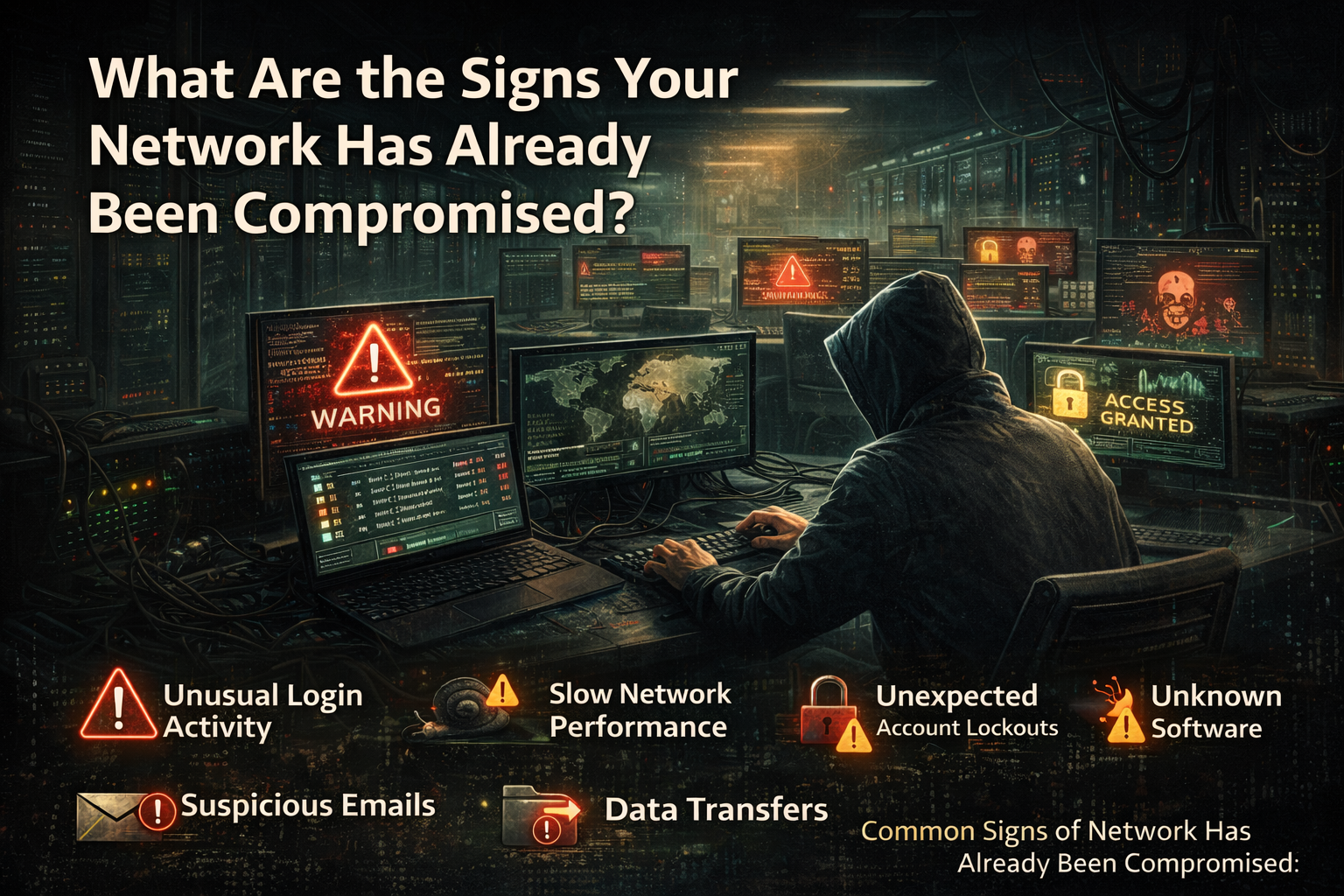
Most cyber attacks don’t happen in a single moment. Attackers often gain access quietly, move through systems unnoticed, and gather information...