







































Is Your Company's Use of AI Creating New Security Risks?
Artificial intelligence is rapidly transforming the way businesses operate. From ChatGPT and Microsoft Copilot to AI-driven automation and analytics,...
Tailored consulting, engineering, and managed security services to meet your needs.
Discover who we are, what drives us, and how Cortrucent partners with businesses to deliver lasting security and technology success.
Explore Cortrucent’s latest insights, industry updates, and expert resources to strengthen your cybersecurity and IT strategy.
2 min read
Madison Bocchino
:
Updated on February 13, 2026
Most cyber attacks don’t happen in a single moment. Attackers often gain access quietly, move through systems unnoticed, and gather information before launching a larger attack. In many cases, businesses don’t realize they’ve been compromised until ransomware is deployed, data is stolen, or systems go offline.
The question isn’t just how to prevent an attack, it’s whether your network may already be compromised without you knowing. Here are the most common warning signs to watch for.
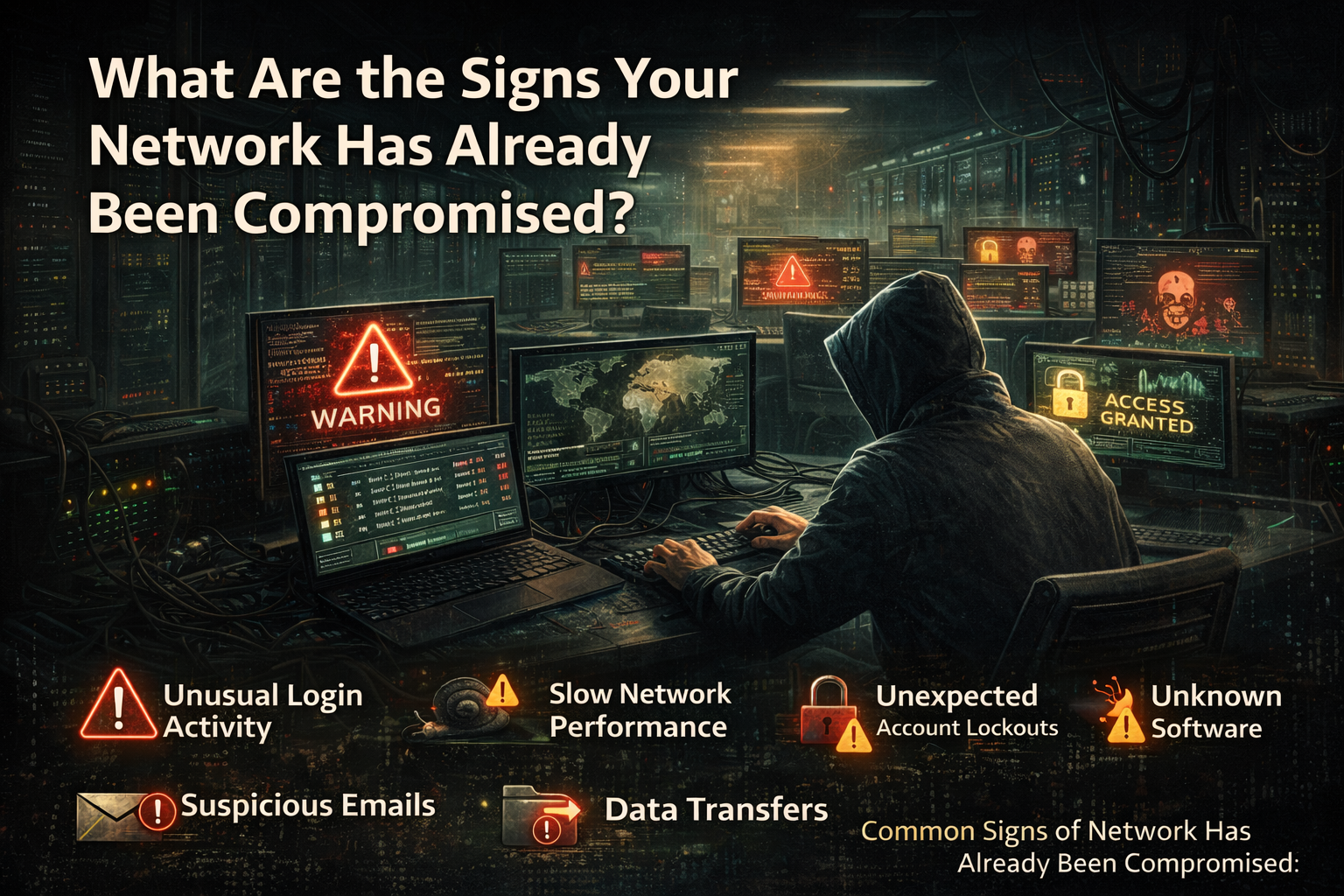
One of the earliest indicators of compromise is suspicious login behavior. This might include:
Attackers often start by stealing credentials through phishing or brute-force attacks. Once they have valid credentials, they can move freely within your systems.
If your network suddenly becomes sluggish and there’s no clear reason, it could indicate malicious activity in the background.
Compromised systems may be:
While performance issues can have many causes, unexplained slow downs should always be investigated.
If employees report being locked out of accounts or noticing password changes they didn’t make, this could signal unauthorized access.
Attackers often change credentials to maintain control or prevent legitimate users from accessing systems during an attack.
The appearance of unfamiliar programs, tools, or services on systems is a red flag.
Many attackers install:
These tools allow them to maintain access and explore your environment further.
If customers or vendors report strange emails coming from your organization, your email system may be compromised.
Business Email Compromise (BEC) attacks often involve attackers taking over internal accounts to send fraudulent payment requests or phishing emails to others.
Advanced attackers frequently attempt to disable antivirus software, logging systems, or monitoring tools to avoid detection.
If security alerts are being triggered repeatedly or worse, if protections appear to have been turned off, it could indicate that someone is actively trying to avoid being seen.
Large or unusual data transfers, especially outside normal business hours, may signal data exfiltration.
Other signs include:
These behaviors often occur before or during ransomware deployment.
In some cases, vendors, customers, or financial institutions notify you of suspicious activity before you notice anything internally.
If an outside organization alerts you to fraudulent emails, payment changes, or abnormal traffic tied to your network, it should be treated as a serious warning.
Cyber attacks today are designed to be quiet. Attackers may remain undetected for weeks or even months before triggering a visible event.
Without proactive monitoring, log analysis, and threat detection, small warning signs are easy to overlook. Many organizations only discover the breach after significant damage has occurred.
If you notice any of these signs, do not ignore them. Immediate action is critical.
You should:
Quick response can dramatically reduce the financial and operational impact of an incident.
A compromised network rarely announces itself loudly at first. The early warning signs are often subtle but they are there. Businesses that monitor proactively and respond quickly are far more likely to contain an attack before it becomes catastrophic.
If you’re unsure about your current security posture, now is the time to evaluate it before attackers make the decision for you.
Artificial intelligence is rapidly transforming the way businesses operate. From ChatGPT and Microsoft Copilot to AI-driven automation and analytics,...
Many small and mid-size businesses believe cybercriminals only target large enterprises. In reality, SMBs are one of the most frequent targets of...

Healthcare organizations are among the most targeted industries for cyber attacks. From hospitals and clinics to private practices and healthcare...